Why Experience Still Struggles To Make the Starting Line‑Up

| Type of post: | Profile news item |
| Sub-type: | No sub-type |
| Posted By: | Amanda Fisackerly |
| Status: | Current |
| Date Posted: | Sat, 7 Feb 2026 |
Why Experience Still Struggles To Make the Starting Line‑Up
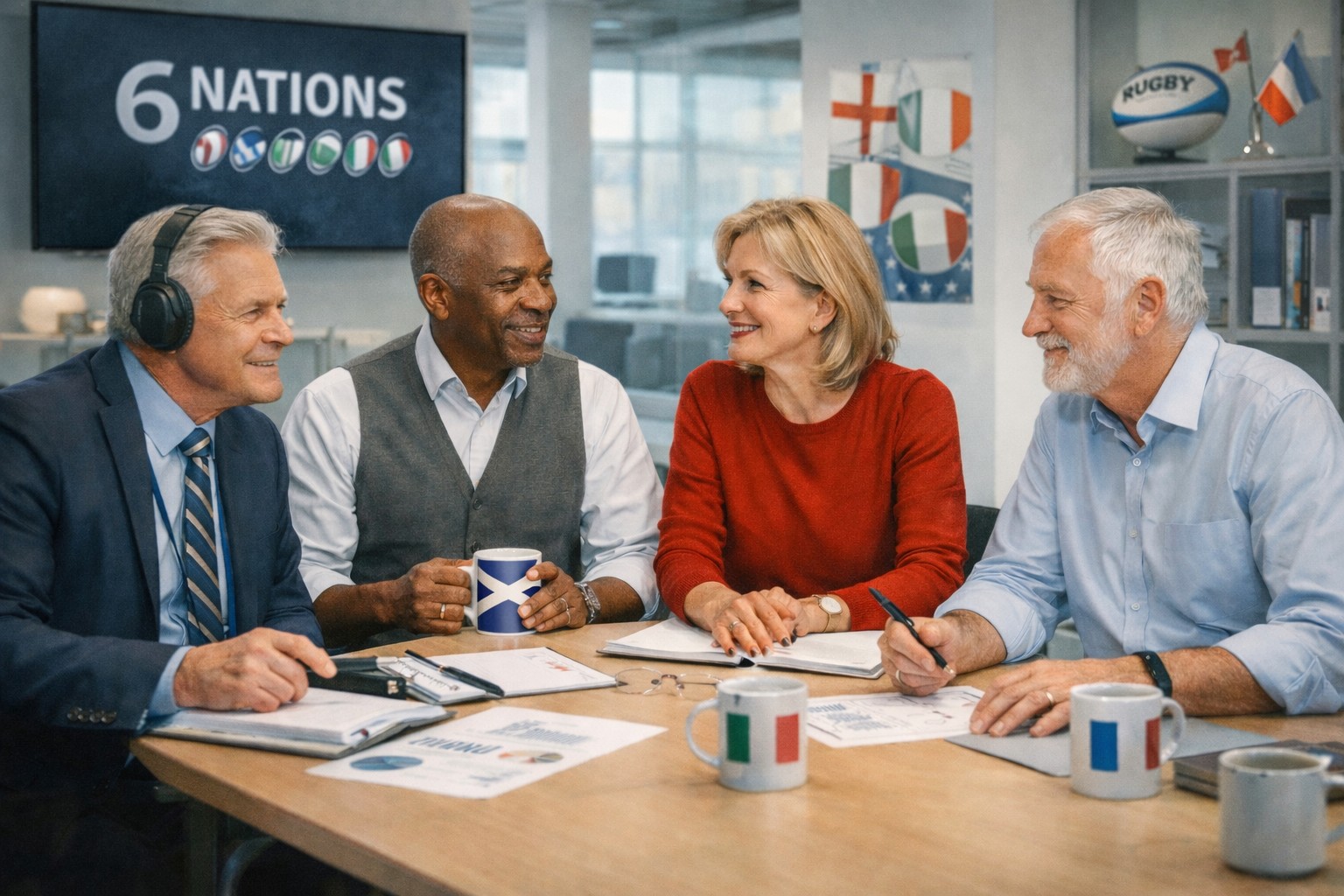
As the Winter Olympics captivate global audiences and the Six Nations begins this week, one theme cuts across both arenas. Experience matters. Coaches talk openly about the value of seasoned athletes who bring calm, judgement and the ability to perform under pressure. Yet in professional recruitment, the opposite pattern persists. Experience is often treated as a disadvantage rather than an asset.
The contrast is difficult to ignore. In sport, years of service are celebrated. In the labour market, they can quietly become a barrier.
What Sport Understands About Experience
Rugby coaches have been particularly clear in the build‑up to the 2026 Six Nations. Ireland’s Simon Easterby emphasised the importance of continuity and maturity within his squad. He said, “We are trying to build continuity, and there is a genuine internal motivation to achieve that. The players are a year older now. They are under a bit more pressure because there is something meaningful to play for, and that is great for us. They are highly motivated to keep being successful.” [1]
At the tournament launch in Edinburgh, coaches spoke repeatedly about the need for composure and experience in high‑pressure moments. England’s Steve Borthwick highlighted the value of momentum and maturity in a squad entering the competition on an eleven‑match winning streak. [2]
Captains echoed the same message. Several spoke about “experience in big moments”, “knowing how to close out tight games” and “learning from previous campaigns”. [3]
The Winter Olympics offers the same lesson. Athletes talk about the depth that comes only from long practice and lived experience. Dawn Fraser described the Games as “the most compelling search for excellence that exists in sport, and maybe in life itself.” [4]
These are not romantic notions. They are operational truths. Coaches select experienced athletes because they know that judgement under pressure is not something you can teach quickly.
The Labour Market Tells a Different Story
Despite this, recruitment practices continue to undervalue experience. More than seventy per cent of people aged over fifty believe recruitment is broken, according to a 2024 HR Magazine survey. The Centre for Ageing Better found that thirty‑six per cent of people aged fifty to sixty‑nine feel their age is a disadvantage when applying for roles. Many report being screened out before they have the chance to demonstrate their capability.
ONS data shows that two thirds of the recent rise in economic inactivity has been among people aged fifty and over. This is not a small trend. It is a structural shift.
Employers often say they want resilience, adaptability and strong decision‑making. Yet they frequently default to younger candidates, even when the role requires the very qualities that experienced professionals bring.
The Cost of Overlooking Experience
When organisations overlook experienced candidates, they lose more than technical skill. They lose judgement, context and the ability to navigate complexity. They lose the equivalent of the veteran player who steadies a team in the final minutes of a tight match.
The Six Nations offers weekly reminders of this. Teams rely on experienced players to manage momentum, read the opposition and make the right choices in moments that decide the outcome. Coaches know that experience is not a drag on performance. It is a stabiliser. 2][3]
The Winter Olympics reinforces the point. Athletes speak of “a lifetime of training for just ten seconds,” as Jesse Owens famously put it. [5] Those ten seconds are not won by instinct alone. They are won by accumulated knowledge.
Why Recruitment Still Gets It Wrong
Several factors continue to shape employer behaviour.
What Employers Can Learn From Sport
If employers adopted the logic of the Six Nations or the Winter Olympics, they would ask different questions.
A Call for a More Mature Recruitment Culture
The labour market is changing. People are working longer. Organisations need deeper capability, not just fresh energy. The data is clear that older workers want to contribute and have the skills to do so. What is missing is a recruitment culture that values experience with the same seriousness that sport does.
Until that shift happens, we will continue to see a mismatch between what employers say they need and who they choose to hire. And we will continue to waste the potential of people whose experience should be an asset, not an obstacle.
References
[1] Six Nations Rugby Media Centre. “Simon Easterby – Ireland Coach.” January 2026.
[2] Guinness Men’s Six Nations. “Six Nations 2026 Launch: ‘Pressure makes it a special competition’.” 28 January 2026.
[3] RUCK.co.uk. “Best against the Best – 2026 Six Nations Launch: What EVERY Captain said.” 26 January 2026.
[4] Dawn Fraser quotation widely cited in Olympic commentary and historical reporting.
[5] Jesse Owens quotation widely cited in Olympic and athletics historical commentary.
As the Winter Olympics captivate global audiences and the Six Nations begins this week, one theme cuts across both arenas. Experience matters. Coaches talk openly about the value of seasoned athletes who bring calm, judgement and the ability to perform under pressure. Yet in professional recruitment, the opposite pattern persists. Experience is often treated as a disadvantage rather than an asset.
The contrast is difficult to ignore. In sport, years of service are celebrated. In the labour market, they can quietly become a barrier.
What Sport Understands About Experience
Rugby coaches have been particularly clear in the build‑up to the 2026 Six Nations. Ireland’s Simon Easterby emphasised the importance of continuity and maturity within his squad. He said, “We are trying to build continuity, and there is a genuine internal motivation to achieve that. The players are a year older now. They are under a bit more pressure because there is something meaningful to play for, and that is great for us. They are highly motivated to keep being successful.” [1]
At the tournament launch in Edinburgh, coaches spoke repeatedly about the need for composure and experience in high‑pressure moments. England’s Steve Borthwick highlighted the value of momentum and maturity in a squad entering the competition on an eleven‑match winning streak. [2]
Captains echoed the same message. Several spoke about “experience in big moments”, “knowing how to close out tight games” and “learning from previous campaigns”. [3]
The Winter Olympics offers the same lesson. Athletes talk about the depth that comes only from long practice and lived experience. Dawn Fraser described the Games as “the most compelling search for excellence that exists in sport, and maybe in life itself.” [4]
These are not romantic notions. They are operational truths. Coaches select experienced athletes because they know that judgement under pressure is not something you can teach quickly.
The Labour Market Tells a Different Story
Despite this, recruitment practices continue to undervalue experience. More than seventy per cent of people aged over fifty believe recruitment is broken, according to a 2024 HR Magazine survey. The Centre for Ageing Better found that thirty‑six per cent of people aged fifty to sixty‑nine feel their age is a disadvantage when applying for roles. Many report being screened out before they have the chance to demonstrate their capability.
ONS data shows that two thirds of the recent rise in economic inactivity has been among people aged fifty and over. This is not a small trend. It is a structural shift.
Employers often say they want resilience, adaptability and strong decision‑making. Yet they frequently default to younger candidates, even when the role requires the very qualities that experienced professionals bring.
The Cost of Overlooking Experience
When organisations overlook experienced candidates, they lose more than technical skill. They lose judgement, context and the ability to navigate complexity. They lose the equivalent of the veteran player who steadies a team in the final minutes of a tight match.
The Six Nations offers weekly reminders of this. Teams rely on experienced players to manage momentum, read the opposition and make the right choices in moments that decide the outcome. Coaches know that experience is not a drag on performance. It is a stabiliser. 2][3]
The Winter Olympics reinforces the point. Athletes speak of “a lifetime of training for just ten seconds,” as Jesse Owens famously put it. [5] Those ten seconds are not won by instinct alone. They are won by accumulated knowledge.
Why Recruitment Still Gets It Wrong
Several factors continue to shape employer behaviour.
- Stereotypes about adaptability
- Assumptions about cost
- A narrow view of career paths
- Automated screening that replicates bias
What Employers Can Learn From Sport
If employers adopted the logic of the Six Nations or the Winter Olympics, they would ask different questions.
- Who brings calm under pressure.
- Who has seen enough cycles to recognise what matters and what does not.
- Who can mentor others.
- Who can anticipate risk because they have lived through it before.
A Call for a More Mature Recruitment Culture
The labour market is changing. People are working longer. Organisations need deeper capability, not just fresh energy. The data is clear that older workers want to contribute and have the skills to do so. What is missing is a recruitment culture that values experience with the same seriousness that sport does.
Until that shift happens, we will continue to see a mismatch between what employers say they need and who they choose to hire. And we will continue to waste the potential of people whose experience should be an asset, not an obstacle.
References
[1] Six Nations Rugby Media Centre. “Simon Easterby – Ireland Coach.” January 2026.
[2] Guinness Men’s Six Nations. “Six Nations 2026 Launch: ‘Pressure makes it a special competition’.” 28 January 2026.
[3] RUCK.co.uk. “Best against the Best – 2026 Six Nations Launch: What EVERY Captain said.” 26 January 2026.
[4] Dawn Fraser quotation widely cited in Olympic commentary and historical reporting.
[5] Jesse Owens quotation widely cited in Olympic and athletics historical commentary.